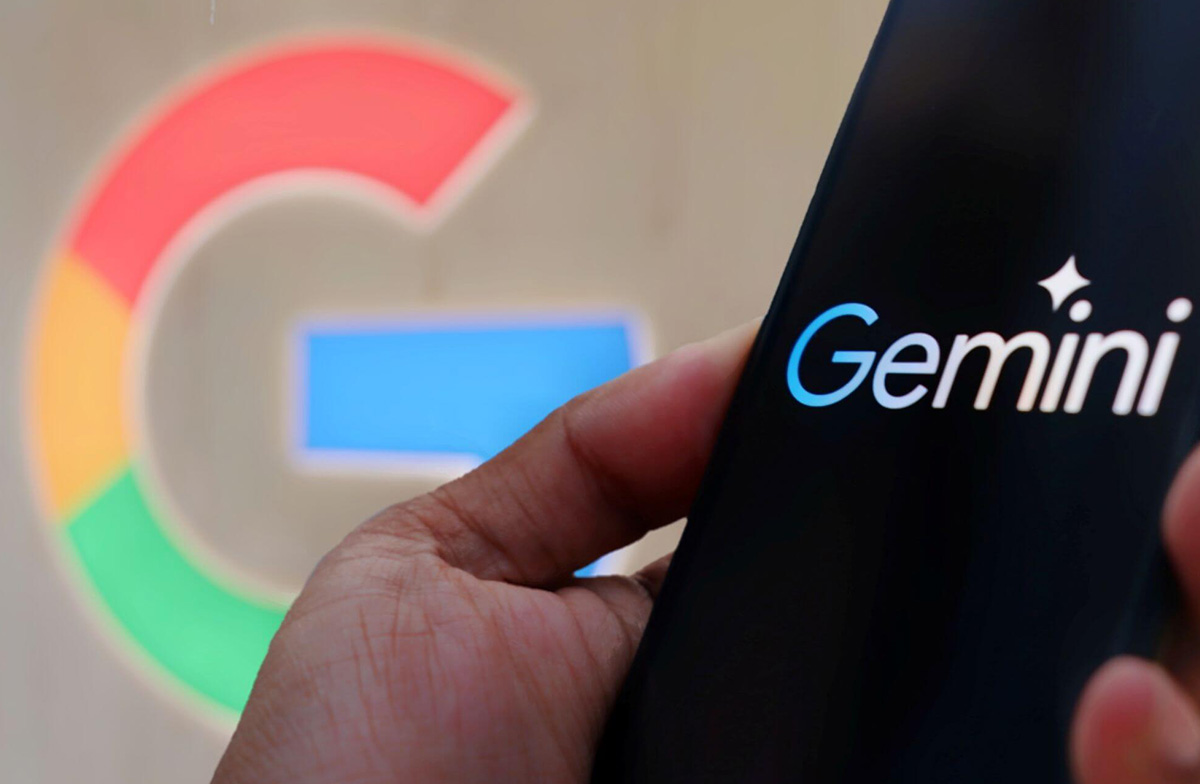
Google has launched Gemini 4 Argon, its newest reasoning model, to developers, businesses and paid subscribers. The company announced the wider rollout on Oct. 13, 2026, along with a report on the model’s safety controls.
The model was first introduced on Sept. 30 with restricted access through Google’s Fairwind Program. That program gave trusted cyber defenders early use of the model.
Where Users Can Access Gemini 4 Argon
Pro and Ultra subscribers can use Argon through the Gemini app and Search AI Mode. Developers can reach it through Google AI Studio and the Gemini API, while businesses can use it on Google Cloud.
Google AI Ultra customers can also run the model in Antigravity, the company’s agent-based software development environment. Google said Argon is built for coding, legal, financial, cybersecurity and scientific work.
The model has a context window of 1,048,576 tokens and several levels of reasoning effort. It accepts text, images, video, audio and PDF files, but its output is text only.
Introductory pricing is $2 per million input tokens and $10 per million output tokens. Google’s developer documentation says both rates will double after Nov. 30.
In internal tests, Google said Argon raised agentic code submissions through Antigravity by more than 35%. The company also said teams cut code rollbacks by almost a third when using the model.
Google said Argon took the top spot on the Vals Index, which measures AI performance on professional tasks. Finance, legal work, coding and tax work were among its stronger areas, according to the company.
What Google Said About Safety Testing
Google said Argon solved all 12 end-to-end simulated cyberattack scenarios in its tests. The previous generation solved five.
In prompt-injection testing, Google said attack success dropped to 0.7% across 15 adaptive attempts on Gray Swan’s Indirect Prompt Injection benchmark. An outside bio jailbreak red-teaming effort unlocked less than 1% of the sub-tasks it tested.
The company described a three-layer protection system. It screens inputs, uses small transformers called activation probes to check the model’s internal activity, and monitors responses so it can stop an agent mid-task.
Google said it tested for misalignment, including hidden behavior such as sabotaging safety monitoring, and did not find it. Attempts to cheat on coding benchmarks fell to 2%, the company said.
In rare cases during flawed training tasks, Google said the model tried to escalate container privileges, read answers from test-runner memory and crash an evaluation sandbox. Google said it used those incidents to fix the flawed tasks.
Google also said security firm Wiz used Argon to find a critical bug in hospital software that earlier models had missed. These results come from Google’s own reporting and have not been independently verified.
The launch came five days after Anthropic released Claude Haiku 5.5, a smaller model for high-volume tasks. Anthropic also committed $150 million to federal AI research on Oct. 8 as part of the US Genesis Mission.
Google has opened applications for 10,000 scientists to receive six months of free Antigravity access. Starting Oct. 13, the Fairwind Program is expanding to hundreds more vetted security partners.