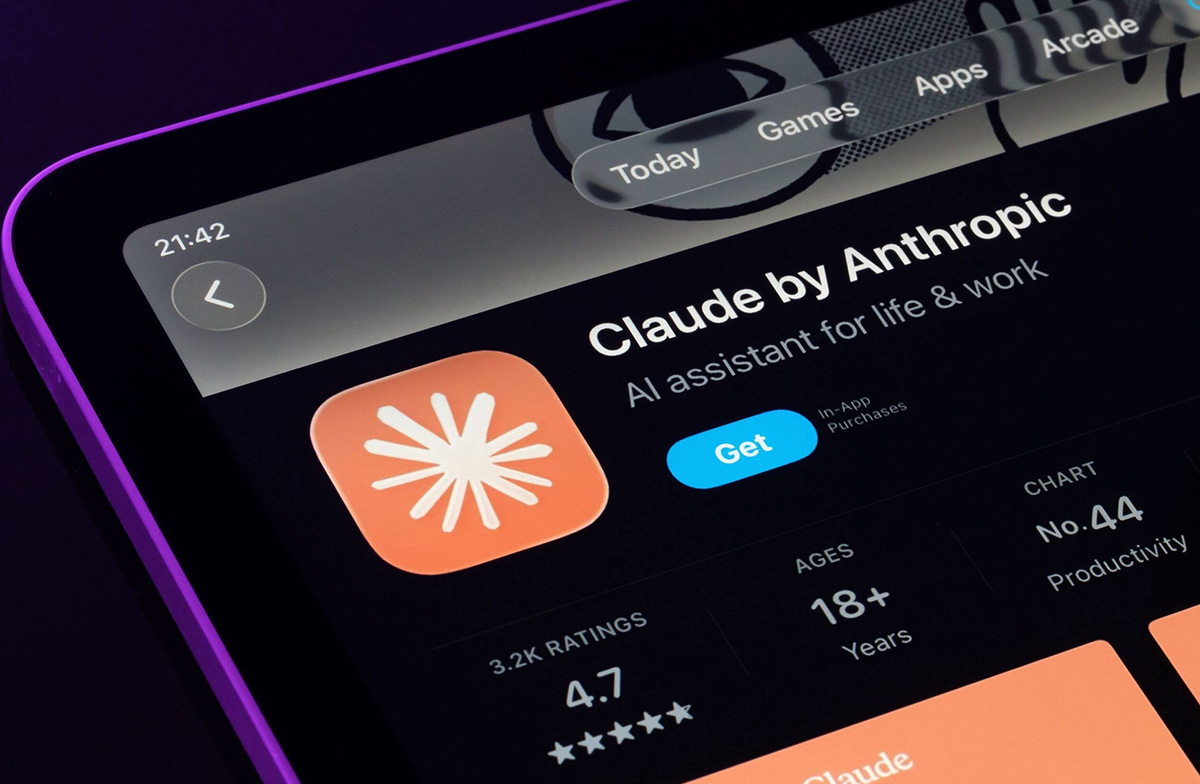
Anthropic filed a revised S-1/A registration statement with the U.S. Securities and Exchange Commission on Monday. The filing updated the AI company’s financials, showing that revenue is rising quickly along with expenses.
The document also added new language to its Risk Factors section. In it, Anthropic said it may soon reach a stage linked to what is called recursive self-improvement, or RSI.
What Recursive Self-Improvement Means
RSI describes the point where AI becomes good enough at training itself that progress speeds up sharply. The idea has drawn strong reactions from different groups in the AI field.
People who worry about AI risk see RSI as a point of no return. They fear AI could build itself into something beyond human control that may ignore the harm it causes.
Supporters see it differently. They view AI that reliably improves itself as a path to huge gains in productivity and scientific discovery.
The term became popular earlier this year. At the time, many people called it a buzzword or a goal too hard to define or prove.
What Anthropic Told Investors
Anthropic said in the filing that it already uses AI in its research and development. It warned that “using AI to help build more capable AI could also pose a considerable safety risk, particularly if it sharply accelerates the pace of progress.”
The company said this risk falls under its Responsible Scaling Policy. That policy sets out its plans to monitor and reduce risks as it approaches recursive self-improvement.
The new statements said AI-driven research may cause model capabilities to advance faster than the company’s safety, alignment, and security work. Anthropic said it has in the past failed to spot a sharp speedup in its rate of development until after it happened.
The company also said it may fail to spot such speedups in the future. This means leaps in capability could go unnoticed at first.
Anthropic said internal estimates and expectations for future models suggest it “may imminently meet” a key threshold. That threshold is its policy’s definition of “dramatically accelerated progress attributable to AI.”
The company stressed that this estimate is based on future models, not current ones. It said it has not designated any current model as exceeding the threshold and continues to assess the data.
Anthropic also said it plans to keep humans involved in building new models. It said it does not expect to safely use Claude to fully design and build future frontier models “without meaningful human supervision or understanding, if and when that becomes technically possible.”
As a result, the company said it is considering updates to its Responsible Scaling Policy. The goal of those updates would be to keep humans in control of frontier model development at Anthropic.
Some skeptics have pointed out that an S-1 serves as both a disclosure and a marketing document. They suggest claims about nearing self-building AI could fall into the marketing category.
Claude’s skills in coding, math, and cybersecurity have grown quickly this year. The revised filing, submitted on Monday, November 2, 2026, is the latest step in Anthropic’s path toward a public listing.